Retirement Planning in Central Wisconsin:
Understanding the Four Tax Buckets of Your Money
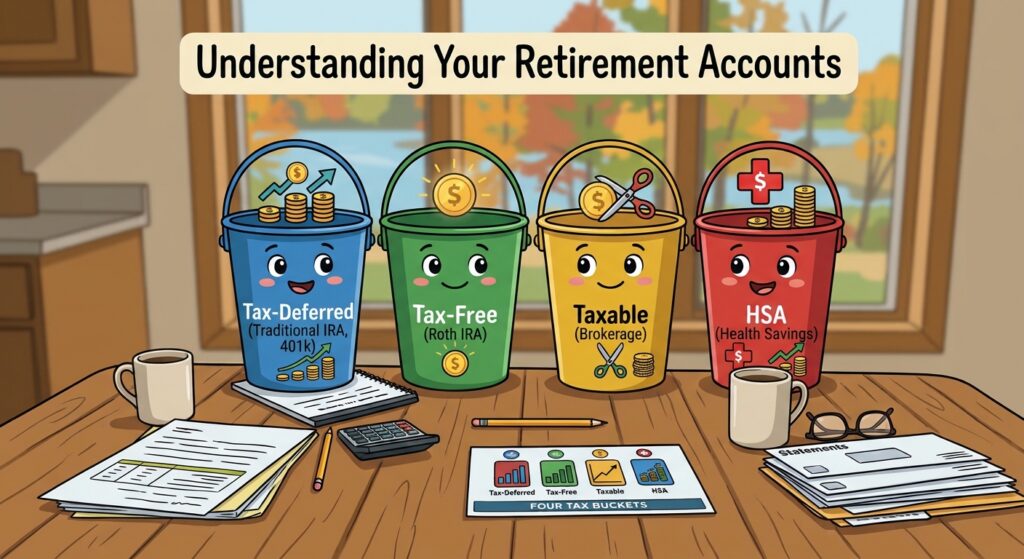
Retirement planning involves more than saving enough money to stop working. It also means understanding how your savings will be taxed when you begin using them. The types of accounts you contribute to today can affect how much of your money you keep in retirement. For individuals and families throughout Central Wisconsin, understanding the tax treatment of retirement accounts can help you plan for future income, manage taxes, and prepare for unexpected expenses. One way to approach tax-efficient retirement planning is to understand the different tax buckets where your money may be held. Traditional retirement accounts, Roth accounts, taxable brokerage accounts, and health savings accounts each have different tax rules. Knowing how they work can help you make more informed decisions about your retirement strategy.
Understanding the Four Tax Buckets
The four main tax buckets are tax-deferred accounts, tax-free accounts, taxable accounts, and health savings accounts. Each offers different advantages depending on when you pay taxes and how you plan to use the money.
- Traditional IRAs and many employer-sponsored retirement plans fall into the tax-deferred category. Contributions may qualify for a tax deduction, depending on the account and your circumstances, and investments can grow without annual taxes on earnings. Taxes generally become due when you withdraw money, with distributions typically treated as ordinary income. For someone who expects to be in a lower tax bracket during retirement, receiving a tax deduction while working and paying taxes on withdrawals later may be beneficial. However, future income, tax rates, and required minimum distributions can all affect whether this strategy makes sense.
- Roth IRAs offer a different approach. Contributions are made with after-tax dollars, meaning you generally do not receive an upfront tax deduction. However, qualified withdrawals, including investment earnings, can be tax-free when applicable requirements are met. This can provide flexibility during retirement because qualified Roth IRA withdrawals generally do not increase your taxable income.
- Taxable brokerage accounts provide another way to save and invest for retirement. These accounts generally do not offer the same tax advantages for contributions as retirement accounts, but they also do not have the same withdrawal restrictions. Investments may generate taxable dividends, interest, or capital gains. One advantage is flexibility, since you can generally access the money without retirement-account early withdrawal penalties, although selling investments may trigger taxes.
- Health savings accounts, or HSAs, can also play a role in retirement planning for eligible individuals enrolled in qualifying high-deductible health plans. Contributions may be tax-deductible or excluded from income, investments can grow tax-free, and withdrawals for qualified medical expenses are tax-free. An HSA may be particularly helpful when planning for healthcare costs, including expenses that arise before Medicare eligibility.
Why Tax Diversification Matters in Retirement
Tax diversification means having savings in accounts with different tax treatments. Rather than placing all your retirement savings in one type of account, you may benefit from having a combination of tax-deferred, Roth, and taxable assets, along with an HSA if eligible. Having multiple types of accounts can give you more choices when deciding where retirement income should come from each year. Depending on your circumstances, you may be able to coordinate withdrawals to cover expenses while managing taxable income. For example, one year you might rely more heavily on taxable investments, while another year you may use withdrawals from a traditional retirement account or qualified Roth distributions. The right approach depends on your income needs, account balances, tax bracket, and other financial considerations. Tax diversification does not eliminate taxes or guarantee a lower tax bill. However, understanding the options available to you can help you prepare for different financial situations throughout retirement.
How Your Investments Fit Into Your Retirement Plan
Where you hold an investment can matter just as much as the investment itself. Different accounts have different tax rules, which can affect how investment income and withdrawals are treated.
For example, interest-producing investments may generate taxable income in a brokerage account, while investments inside tax-deferred retirement accounts generally do not create an annual tax bill on earnings. Roth accounts may offer tax-free qualified withdrawals, while taxable accounts can provide greater access to funds. There is no single account or investment strategy that works for everyone. Your age, retirement timeline, income, risk tolerance, and financial goals all play a role in determining how your money should be allocated. A coordinated retirement strategy considers both what you invest in and which accounts hold those investments. Retirement planning is not just about how much you save. It is also about understanding how your money is taxed, when you can access it, and how different accounts work together to support your long-term goals. For Central Wisconsin residents, reviewing traditional IRAs, Roth IRAs, taxable brokerage accounts, and HSAs can be a useful step toward building a retirement income strategy that accounts for taxes and future expenses.
Ready to take the next step in your retirement planning?
Schedule an appointment with one of our financial advisors to discuss your retirement goals, explore tax-efficient strategies, and learn how different account types may fit into your retirement plan. Whether you are preparing for retirement or already retired, having a plan can help you make more informed financial decisions.
Next Steps
Reviewing the differences between mutual funds, ETFs, and individual stocks can help investors better understand how each option may fit within their retirement plan. The appropriate investment strategy depends on individual goals, timeline, risk preferences, and tax considerations. For investors reviewing their current portfolio, investment costs, or retirement account options, evaluating these factors can help identify opportunities to create a more efficient and suitable long-term strategy.